Wednesday, February 11, 2009

Garden Expo: Feb. 13-15


The 16th annual Garden Expo will be held at the Exhibition Hall of the Alliant Center in Madison, Wisconsin, February 13-15, 2009.


The Expo features exhibits, seminars and workshops for the gardener and landscaping enthusiast. Many of the speakers are staff with UW Cooperative Extension.


Also of interest:


[Thanks to Steenbock Library Blog]

Tuesday, February 10, 2009

Wisconsin: Latest ag stats


The latest USDA Census of Agriculture was just released.

Wisconsin statistics:

  • # of farms in 2007: 78,463 (#9 in U.S.A.)

  • # of farms in 2002: 77,131

  • # of acres in farms 2007: 15,190,804

  • # of acres in farms 2002: 15,741,552

  • Average # of acres per farm 2007: 194

  • Average # of acres per farm 2002: 204

  • Commodities raised and delivered under production contracts (vegetables, melons and potatoes) - 527 farms (#2 in USA)

Organic agriculture:

  • 1,443 farms (#2 in USA)

  • 147,120 acres (#4 in USA)

  • $80,630,000 product sold (#4 in USA)

North American Industry Classification System:

  • Oilseed and grain farming: 13,508 farms

  • Vegetable and melon farming: 1,645 farms

  • Fruit and tree nut farming: 1,320 farms

  • Greenhouse, nursery, and floriculture operation: 2,147 farms

  • Other crop farming: 22,081 farms (#5 in USA)

  • Beef cattle ranching and farming: 11,593 farms

  • Cattle feedlots: 2,485

  • Dairy cattle and milk production: 13,081 farms (#1 in USA)

  • Hog and pig farming: 989 farms

  • Poultry and egg production: 2,297 farms

  • Sheep and goat farming: 1,501 farms

  • Animal aquaculture or other animal production: 5,816 farms - including 828 farms with colonies of bees
Specific crops:
  • Asparagus - 244 acres (#6 in USA)

  • Green lima beans - 3,435 acres (#3 in USA)

  • Snap beans - 70,885 acres (#1 in USA)

  • Beets - 2,784 acres (#1 in USA)

  • Head cabbage - 5,990 acres (#6 in USA)

  • Carrots - 3,988 acres (#4 in USA)

  • Cucumbers and pickles - 6,084 acres (#8 in USA)

  • Ginseng - 554 acres (#1 in USA)

  • Peas, Chinese (sugar and snow) - 69 acres (#5 in USA)

  • Green peas (excluding Southern) - 37,405 acres (#3 in USA)

  • Potatoes - 63,933 acres (#4 in USA)

  • Pumpkins - 3,600 acres (#8 in USA)

  • Winter squash 823 acres (#8 in USA)

  • Sweet corn - 91,218 acres (#3 in USA)

  • Corn for grain - 437,174,706 bushels

  • Corn for silage or greenchop - 11,645,140 tons (#2 in USA)

  • Mint for oil, All (pounds) - 325,782 (#5 in USA)

  • Oats for grain - 11,122,339 bushels

  • Soybeans for beans - 54,701,222 bushels

  • Sunflower seed - 4,449,621 pounds

  • Apples - 6,406 acres (#7 in USA)

  • Cherries - 2,567 acres (#3 in USA)

  • Cranberries - 18,696 acres (#1 in USA)

  • Currants - 11 acres (#4 in USA)

  • Raspberries - 286 acres (#9 in USA)

  • Aquatic plants - 1,342,175 dollars in sales (#7 in USA)

  • Flower seeds - 1,718,916 dollars in sales (#4 in USA)

  • Greenhouse fruits and berries - 28,927 dollars in sales (#4 in USA)

  • Mushrooms - 2,057,661 dollars in sales (#4 in USA)

  • Maple syrup - 108,108 gallons produced (#4 in USA)

  • Forage - land used for all hay and all haylage, grass silage, and greenchop (tons, dry equivalent) - 8,528,063 (#3 in USA)

  • Alfalfa hay (tons, dry) - 3,673,619 (#6 in USA)

  • All haylage, grass silage, and greenchop - 8,446,369 green tons (#1 in USA)

  • Hay, haylage, grass silage, and greenchop - 8,528,063 dry tons (#4 in USA)

  • Haylage or greenchop from alfalfa or alfalfa mixtures (tons, green) - 7,931,573 (#1 in USA)

  • Honey - 4,167,522 pounds collected
Inputs:
  • Manure - 2,011,176 acres treated

  • Commercial fertilizer, lime, and soil conditioners - 6,988,477 acres treated

  • Chemicals to control weeds, grass, or brush - 5,227,166 acres treated

  • Chemicals to control insects - 2,125,800 acres treated

  • Chemicals to control diseases in crops and orchards - 251,421 acres treated

  • Chemicals to control nematodes - 128,798 acres treated

  • Chemicals to control growth, thin fruit, ripen, or defoliate - 67,308 acres treated

Impact factors: Food science journals


Food science & technology journals
ranked by 2007 impact factor:

  1. Critical Reviews in Food Science and Nutrition

  2. Trends in Food Science and Technology

  3. Molecular Nutrition and Food Research (was Die Nahrung / Food)

  4. Food Chemistry

  5. Foodborne Pathogens and Disease

  6. International Journal of Food Microbiology

  7. Journal of Agriculture and Food Chemistry

  8. Food Hydrocolloids

  9. Journal of Dairy Science

  10. Food Research International

"The 2007 impact factor is calculated by taking the number of all current citations to source items published in a journal over the previous two years and dividing by the number of articles published in the journal during the same period--in other words, a ratio between citations and recent citable items published."

[Source: ScienceWatch, 2/1/09]

Thursday, February 5, 2009

Crop-eating caterpillars cause state of emergency


Achaea catocaloides rena has been identified as the insect destroying coffee, cocoa, banana and plantain farms, and contaminating water sources, across Liberia and Guinea in Africa.

According to CABI, "More than 20,000 people have so far had to evacuate their homes."

A. catocaloides rena is a member of the Noctuidae or "Owlet" moth family in the order Lepidoptera.

See also:
[Image of A. janata caterpillar (not A. catocaloides) by Djovani. Creative Commons Attribution-Noncommercial-No Derivative Works 2.0 Generic. http://www.flickr.com/photos/14126791@N03/1678406276]
[Copyrighted image of A. catocaloides rena moth used by permission of the Royal Museum for Central Africa, Belgium. http://www.metafro.be/lepidoptera/butterflies/RMCA-2171/taxon]

Wednesday, February 4, 2009

ISI Web of Knowledge: new features


Web of Knowledge enhancements:

  • Search by "Funding Agency" or "Grant Number" field in Web of Science

  • Search by "Author," "Group Author," or "Editor" field in Web of Science

  • Search History and Alerts now include changes made with the Refine and Analyze tools

  • Customize, save and print citation relationship visualizations with the Citation Map (beta) tool

  • Use the Simplified Chinese interface (简体中文) - now expanded to field labels in full record and summary display

More updates:

  • Explore global agriculture and applied life sciences literature in CAB Abstracts
  • Visualize impact factors and self-citations, find 5-year impact factors, compare rank for journals in multiple subject categories, and get Eigenfactor and Article Influence scores in Journal Citation Reports

  • Install the Firefox 3 plug-in with EndNote Web to store references from other databases

Questions?

Friday, January 30, 2009

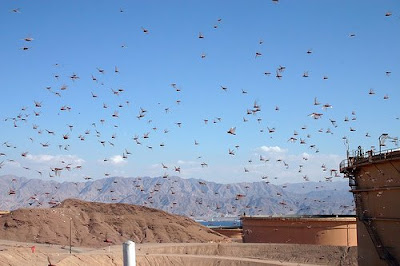
Locust swarms and serotonin


Original article:
Anstey, M.L., Rogers, S.M., Ott, S.R., Burrows, M., & Simpson, S.J. (30 January 2009). Serotonin mediates behavioral gregarization underlying swarm formation in desert locusts. Science 323 (5914): 627-630. [DOI: 10.1126/science.1165939]
  • Includes links to a longer commentary (Perspectives) and shorter commentary (ScienceNow), an author interview podcast and podcast transcript
You may also be interested in:
[Photo by niv. License: Creative Commons Attribution-Share Alike 2.0 Generic. http://www.flickr.com/photos/antichrist/34263361]

Videos on Diseases with Insect Vectors


"
Kill or Cure" is a series of 25-minute films on diseases faced by people living in developing nations, some of which have insect vectors. Subjects include:
  • Malaria (mosquito)
  • River blindness (black fly)
  • Kala Anzar / Visceral Lieshmaniasis (sand fly)
  • Chagas (kissing bug)
  • Dengue fever (mosquito)
  • Encephalitis (mosquito)
  • Trachoma (flies)
Rockhopper.tv distributes these documentaries, and provides free streaming online access.

[Photo by James Jordan. License: Creative Commons
Attribution-No Derivative Works 2.0 Generic. http://www.flickr.com/photos/jamesjordan/2612506038]

Global Research on Cocoa


GRO-Cocoa
- "Global Research On Cocoa: Working with and for farmers" - is a twice-yearly newsletter funded by the USDA and created by CABI.

All issues of the newsletter are available free online, back to issue #1 in June 2002.

CABI is "a not for profit, intergovernmental organization that improves people's lives worldwide by providing information and applying scientific expertise to solve problems in agriculture and the environment." They are publishers (ex: CAB Abstracts), researchers, consultants, and purveyors of microbial research services.

You may also be interested in:

Wednesday, January 28, 2009

Peace Corps Master’s program in Agronomy, Horticulture


UW
-Madison offers "Peace Corps Master’s International" programs in partnership with the CALS departments of agronomy, animal sciences, forest & wildlife ecology, horticulture, life sciences communication, and urban & regional planning.

This program allows you to combine Peace Corps service with graduate studies for credit. Typical programs start with a year of classes, followed by two years in an international assignment, with a final period back on campus to complete your master's degree.

See also: